

5 Steps for Parents to Recover from Overparenting… KQED
I am enjoying learning more about the reaction folks are having to this book. This piece is spot on. If we do not avoid overparenting, our children will revolt!
5 Steps for Parents to Recover from Overparenting… KQED
I am enjoying learning more about the reaction folks are having to this book. This piece is spot on. If we do not avoid overparenting, our children will revolt!

The first of our Seven Hills School Parent Lecture Series events was a tremendous success! As parents, neighbors and friends of the school exited Hunt Hall, the refrains were resoundingly positive:
“I could listen to him all day.”
“I’d love him to come speak to my employees at my company.” “I want my spouse to hear him.”
The most powerful part of his message, and indeed, one of the focal points of his research and scholarship, is the normalization of emotions; the necessity for a wide and varied emotional landscape inside each human. Emotions are a necessary part of childhood development and, quite frankly, a natural part of living. And they help us. It was a terrific validation of the Seven Hills social emotional curriculum and our commitment to a whole child approach to education. It was also just a great evening.
To learn more please, click on these links:
Greater Good Berkeley Dacher Keltner
Dacher Keltner New York Times Op Ed

There is plenty of room for adjustment on all sides here. Schools and parents DO need to work together. I feel sure that we could definitely improve how we think about autonomy for students from all angles.

Adolescence is a tornado of change: Not only is it the period of fastest physical change in life – aside from infancy
I often quote statistics about developmental changes in the middle school years: people change more between 10 and 15 than in any other point in our development except birth to three years. But we are not aware of those changes. The “tornado metaphor” is apt. At Seven Hills we pride ourselves on our ability to help students navigate their complex emotional lives. This is a very helpful article…
Identity and Emotion in the teenage brain
Having attended and worked at all girls schools, I have enjoyed the research out that uncovers how women need to support each other and that we need to model what we do in front of girls. We can be each other’s greatest supports and each other’s most painful critics…
After all, college admissions is a beginning, not an ending.
This is a serious and honest piece about the damage we unwittingly inflict on children when we focus on the immediate outcome, rather than the long term journey…
I think our focus on “the whole child” at Seven Hills helps to combat some of this. We need to take stock of all the messages we send, spoken and unspoken, about what and who we value…

The proliferation of articles and blog posts on parenting and fears of parents lead me to the obvious and inevitable conclusion that we, as parents, are too consumed with our children as our bumper stickers. Life is messy, and our children do not automatically reflect us and our parenting strengths or weaknesses (at least not ALL the time.)

I had the opportunity to learn first-hand from Tony Schwartz, who spoke at a Head’s Conference in New York a few years ago., I have been intrigued by The Energy Project ever since.
Enjoy!
New York Times Op-Ed by Tony Schwartz on attention…
“Kids who read more get better at reading, and because they are better at reading, it’s easier and more pleasurable so they read still more,” he said. “And kids who read well don’t just do better in English class — it helps them in math, science and every other class, too.”
This is a great reminder about the power of words for children.
New York Times Op Ed The Gift of Reading
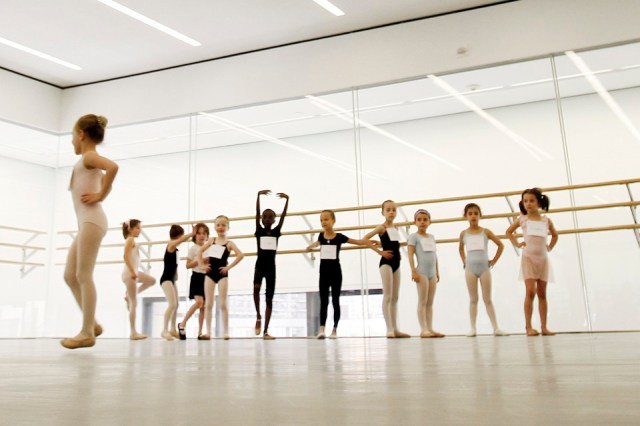
Former prima ballerina and now faculty member Darci Kistler looks on during the first ever auditions for six-year-olds at the School of American Ballet (SAB) at Lincoln Center in New York May 7, 2007. The previous minimum admission age was eight at SAB, the premier ballet academy in the U.S. and the official academy of the New York City Ballet, which places approximately 20 students annually with professional dance companies around the world. REUTERS/Mike Segar (UNITED STATES) – RTR1PGBC
I am forever pushing back against the demonization of parents. Many of us are doing the best we can, or at least the best we think we should be doing. There are some sobering facts here, and again, I am brought back to the work of Dr. Richard Weissbourd at Harvard.
 Head's Up, Kathleen McNamara